Ketryx for Robotics

Build safer robotics faster.

Ketryx connects to your existing development tools to automate safety documentation, create real-time traceability across the IEC 61508 safety lifecycle, and enforce functional safety processes so teams achieve certification faster without reworking their toolchain.
30 minutes · No commitment · Tailored to your stack and standards
Proven at scale in FDA-regulated environments. Now available for robotics teams.
The Reality

Robotics are exploding in complexity. Safety documentation hasn't kept up.

Cross-domain traceability is manual and unmanageable.
Robotics safety cases must trace across hardware, firmware, embedded software, and AI/ML models. Teams manually construct traceability matrices spanning DOORS, Git, VectorCAST, and Excel — a gap in any link can fail an assessment.
Certification preparation consumes months.
Preparing the safety case documentation package for third-party assessment is one of the most time-consuming activities. Safety managers must manually compile evidence from multiple systems, ensure consistency, and address gaps — often discovering issues late that trigger rework.
EU AI Act compliance has no established playbook.
Robots with AI/ML capabilities will be classified as high-risk AI systems under the EU AI Act, requiring technical documentation, risk management, and conformity assessments. Most robotics companies have no existing infrastructure to meet these requirements — on top of existing IEC 61508 obligations.
How Ketryx Works

One platform that connects functional safety to development.

Real-time traceability from hazard analysis to verification.

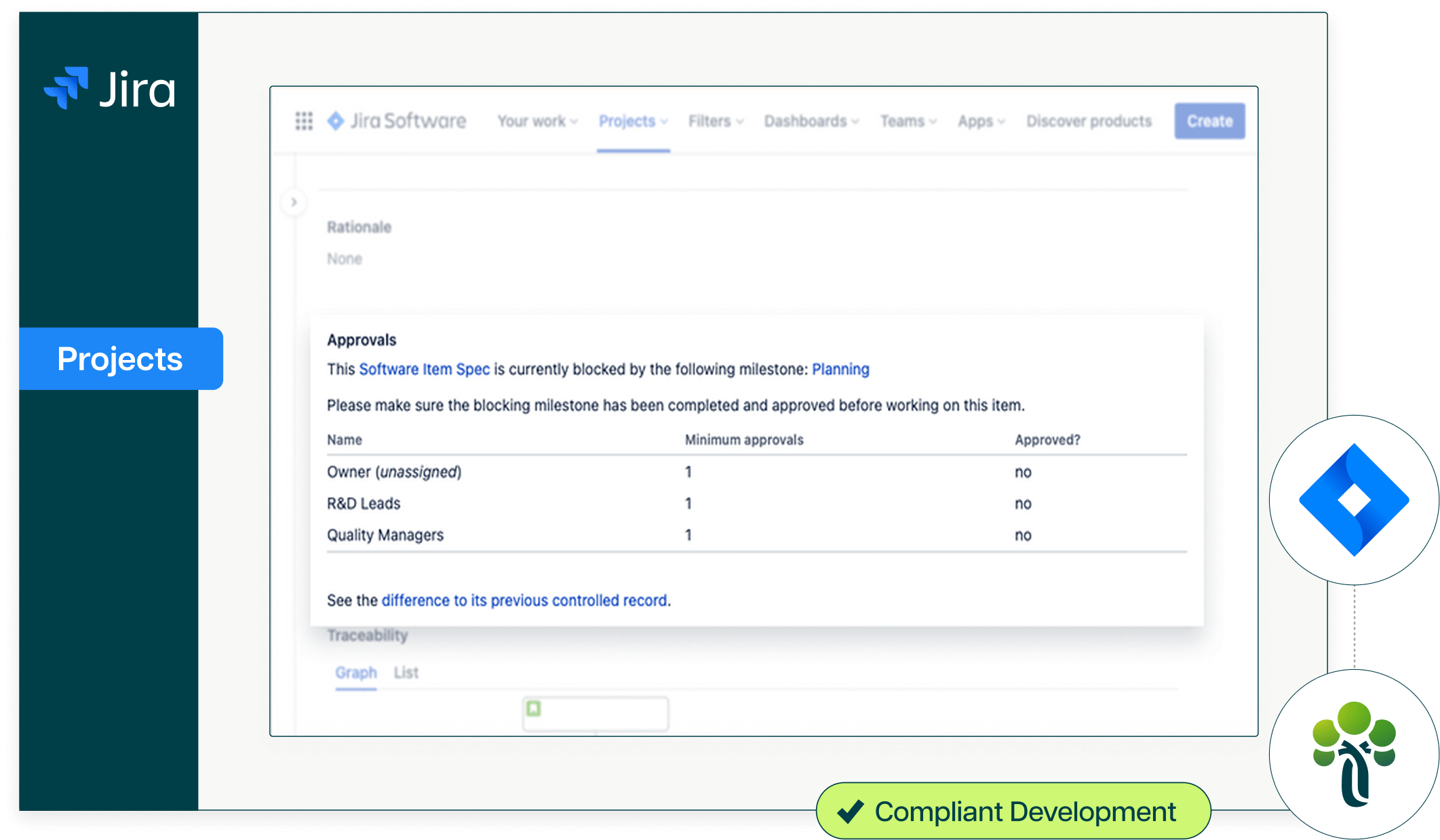
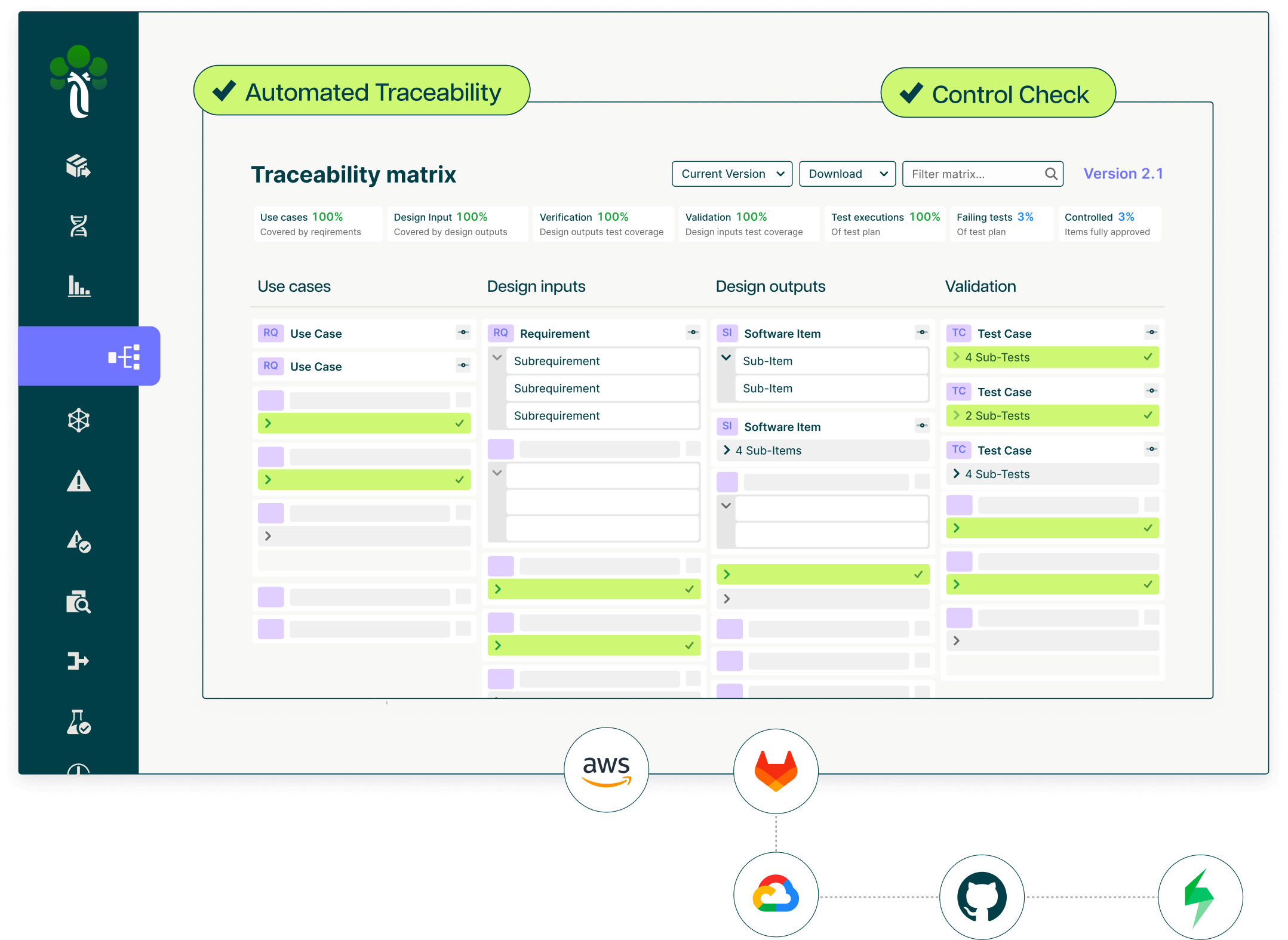
Safety requirements must be traceable from hazard analysis through safety goals, safety requirements, implementation, and verification evidence. Ketryx automatically creates and maintains that traceability chain across Jira, Git, and TestRail in real time. No more manual trace matrices — your Safety Case stays current as your team works.
AI agents that cut safety documentation time by 90%.

Ketryx AI Agents understand IEC 61508 work products and functional safety documentation requirements. They generate Safety Plans, Safety Requirements Specifications, and V&V evidence as a byproduct of your normal development workflow — not as separate manual activities that take months.

Safety impact analysis in hours, not weeks.

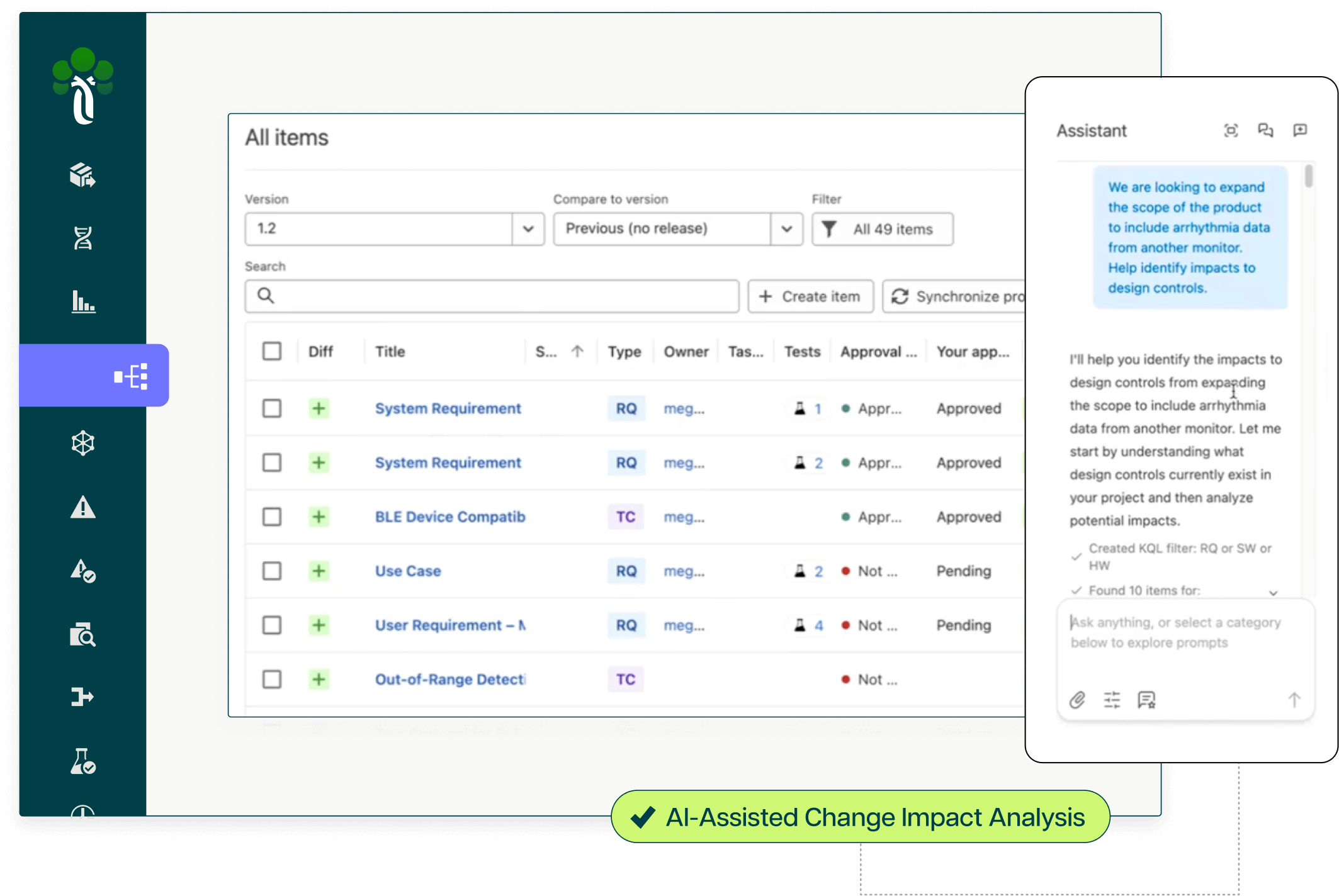
When an ML model changes, a new SIL assignment is made, or a hazard analysis is updated, Ketryx identifies the full downstream impact across architecture, implementation, tests, and risk documents in minutes. You see the full blast radius before the change is accepted — critical when every AI/ML model update triggers a safety review.
Results

Built for the most regulated industry in the world. Now available for robotics.

0%
Reduction in manual trace matrix maintenance
0%
Audit-ready, 100% of the time
0x
Faster documentation cycles
Hours
Time-to-value, not months
Integrations

Connects to the tools your robotics team already uses.

Ketryx overlays your existing development and compliance tools — no rip-and-replace. Your team keeps working where they work.


How a Fortune 50 Robotics Company Moved 80% Faster

A Fortune 50 Robotics company partnered with Ketryx to accelerate releases and modernize risk management workflows. Improvements to its Cybersecurity System Architecture (CSA) exposed gaps in a process slowed by fragmented tools, inconsistent data, and manual handoffs. Ketryx unified these processes into an AI-driven system that streamlined prioritization and increased review throughput. The result: the team now operates 80% faster.

Read the case study
Compliance Depth

Built for IEC 61508, ISO 13849, and the EU AI Act.

Standard What It Requires How Ketryx Helps
IEC 61508 Generic functional safety standard for electrical, electronic, and programmable electronic safety-related systems. Assigns Safety Integrity Levels (SIL 1–4) that determine the rigor of safety verification, requires full bidirectional traceability, systematic capability assessment, and Safety Case documentation across the complete safety lifecycle Automated SIL-level traceability from hazard analysis through safety goals, safety requirements, architecture, implementation, and verification evidence. Real-time Safety Case generation with bidirectional trace matrices maintained automatically across all SIL levels
ISO 13849 Safety of machinery, specifically safety-related parts of control systems. Defines Performance Levels (PL a to e) using a designated architecture approach for machine safety functions. ISO 13849-1 is a parallel standard to IEC 61508; both address the functional safety of control systems but use different assessment methodologies Performance Level traceability linked to safety function documentation, automated safety requirements specifications, continuous verification evidence
ISO 10218 Safety requirements for industrial robots and robot systems; recently updated (2025) to include collaborative applications, cybersecurity, and safe end-effector handling Automated documentation aligned to ISO 10218 clauses, traceability across collaborative robot safety functions, cybersecurity requirement linkage
IEC 62443 Industrial cybersecurity standard for connected and autonomous robotic systems; increasingly required for networked robots and Industry 4.0 deployments IEC 62443-compliant software supply chain management, SBOM generation, cybersecurity traceability linked to functional safety artifacts
ISO 26262 Functional safety standard for road vehicles and their electrical/electronic systems. Assigns Automotive Safety Integrity Levels (ASIL A–D) based on severity, exposure, and controllability. Applies to autonomous mobile robots (AMRs), autonomous guided vehicles (AGVs), delivery robots, and other robotic systems operating in road or mixed-traffic environments ASIL-level traceability from hazard analysis and risk assessment through safety goals, functional and technical safety requirements, and verification evidence. Automated documentation aligned to ISO 26262 work products, including safety case artifacts and confirmation reviews
EU AI Act High-risk AI system requirements include technical documentation, risk management, data governance, human oversight, and conformity assessments. Obligations are phased: general-purpose AI rules apply from August 2025, prohibited practices from February 2025, and high-risk AI requirements for products regulated under existing EU harmonisation legislation, including machinery with AI-powered safety functions, apply from August 2027 AI/ML documentation and traceability automation, risk management linkage across safety and AI domains, conformity assessment evidence generation

Frequently Asked Questions

Does Ketryx support IEC 61508 and ISO 13849 compliance workflows?

How long does it take to set up?

How does Ketryx handle AI/ML-powered robot systems?

Can Ketryx help with EU AI Act compliance?

Does Ketryx support certification workflows?